

Editor’s note: This article is part of the SOLA build diary and was written during the final months of construction, before the hotel opened. You can see what SOLA looks like today here.
Exciting times are ahead at SOLA. After 310 days of work, we’re entering the final stretch of building a boutique hotel in Sri Lanka, with just 90 days left before construction is due to be completed.
A lot has happened since our last update in May.
Construction is moving forward across almost every part of the property — from the pavilion and villas to infrastructure, interiors and landscaping. And while everything is finally beginning to come together, somehow the to-do list keeps getting longer. We suspect that’s a familiar feeling for anyone who has ever built a hotel.
One of the biggest milestones over the past few months has been finalising our agreements with local carpenters. After months of selecting materials, reviewing samples and refining details, they’re now crafting the custom furniture that will eventually become part of SOLA’s suites and communal spaces.
Working with local craftspeople has been an important part of the project from the beginning. Rather than filling the hotel with off-the-shelf interiors, we want the spaces to feel connected to the place they’re in.
We can’t wait to finally see everything come together.
Beyond Construction: Getting SOLA Ready to Open
As the physical build moves closer to completion, another enormous part of opening SOLA is beginning behind the scenes: operations.
Building the hotel is only the first half of the job. The next step is creating the team and systems that will eventually bring it to life. Our General Manager will join us in November, and recruitment will begin shortly afterwards. We expect to create more than 30 positions across the hotel, including front office, housekeeping, restaurant and bar, maintenance and other operational roles.
For us, SOLA was never intended to be just a collection of rooms. The people working here will ultimately shape how guests experience it.
From welcoming someone when they arrive to preparing breakfast, maintaining the gardens or helping guests discover Ahangama, we’re beginning to build the team that will define SOLA long after construction has finished.
Here’s what has been happening on site.
The Pavilion Roof Takes Shape
Most of the major structural work has now been completed, which feels like an enormous milestone. Getting here wasn’t entirely straightforward.
We experienced a four-week delay after several structural elements needed to be adjusted. Among the changes were increasing the thickness of the steel beams supporting the pavilion and building additional rubble support walls beneath the villas overlooking the paddy field.
Changes like these sound relatively simple on paper.
In practice, they mean revising technical drawings, obtaining approval from our structural engineer, sourcing materials and coordinating changes with the construction teams on site.
Fortunately, those works are now behind us and we’re moving forward again.
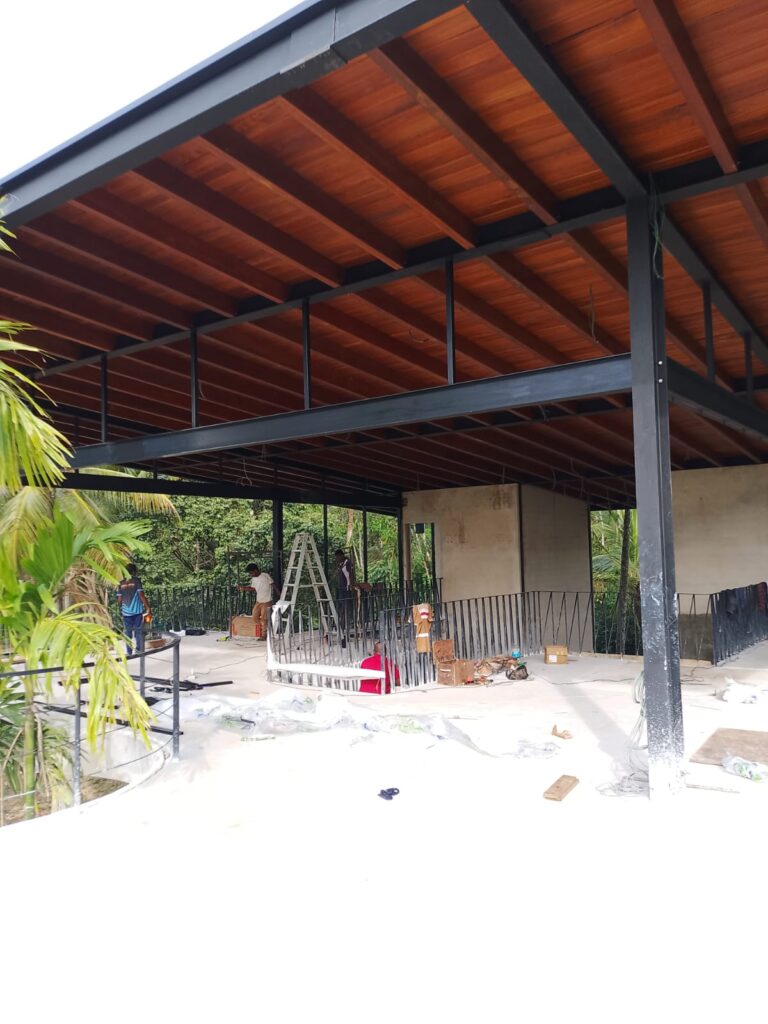
One of the most exciting moments so far has been seeing the stainless-steel pavilion roof begin to take shape.
For the first time, we could properly see the proportions and character of what will eventually become one of SOLA’s central spaces.
The open-air pavilion will sit at the heart of the property and ultimately become home to our restaurant and shared guest spaces. You can see what that concept eventually became on our current Food & Drinks page.
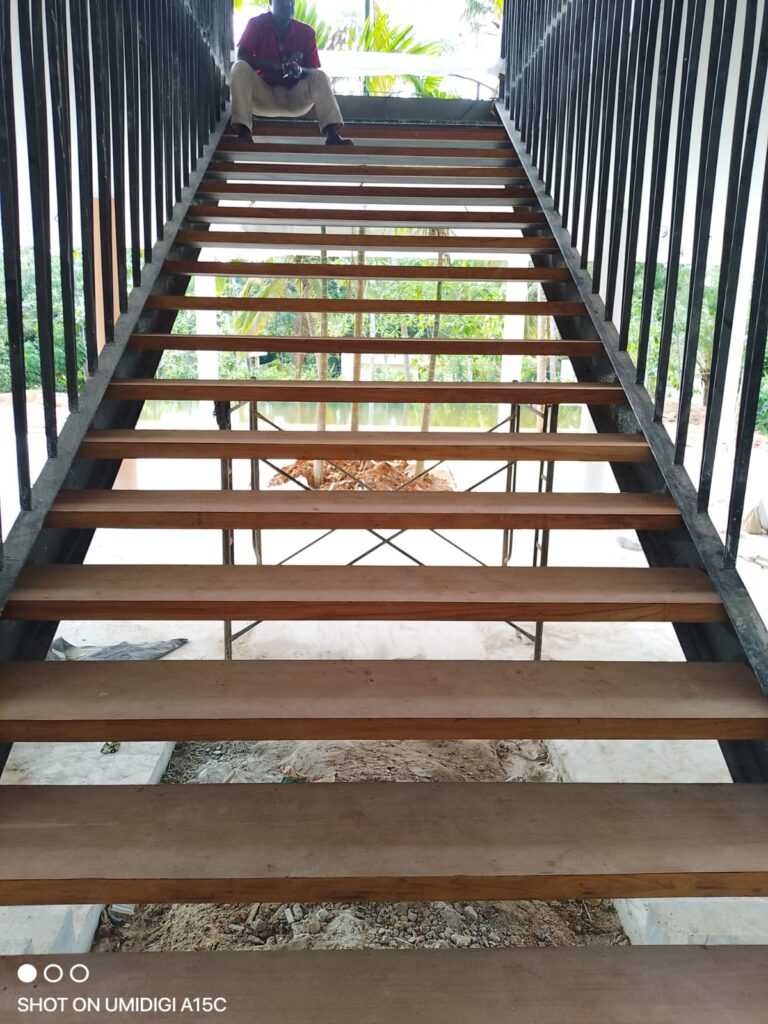
At the same time, a team of local carpenters has been preparing the timber rafters that will remain visible from underneath the pavilion roof.
Each piece is being prepared and shaped on site.
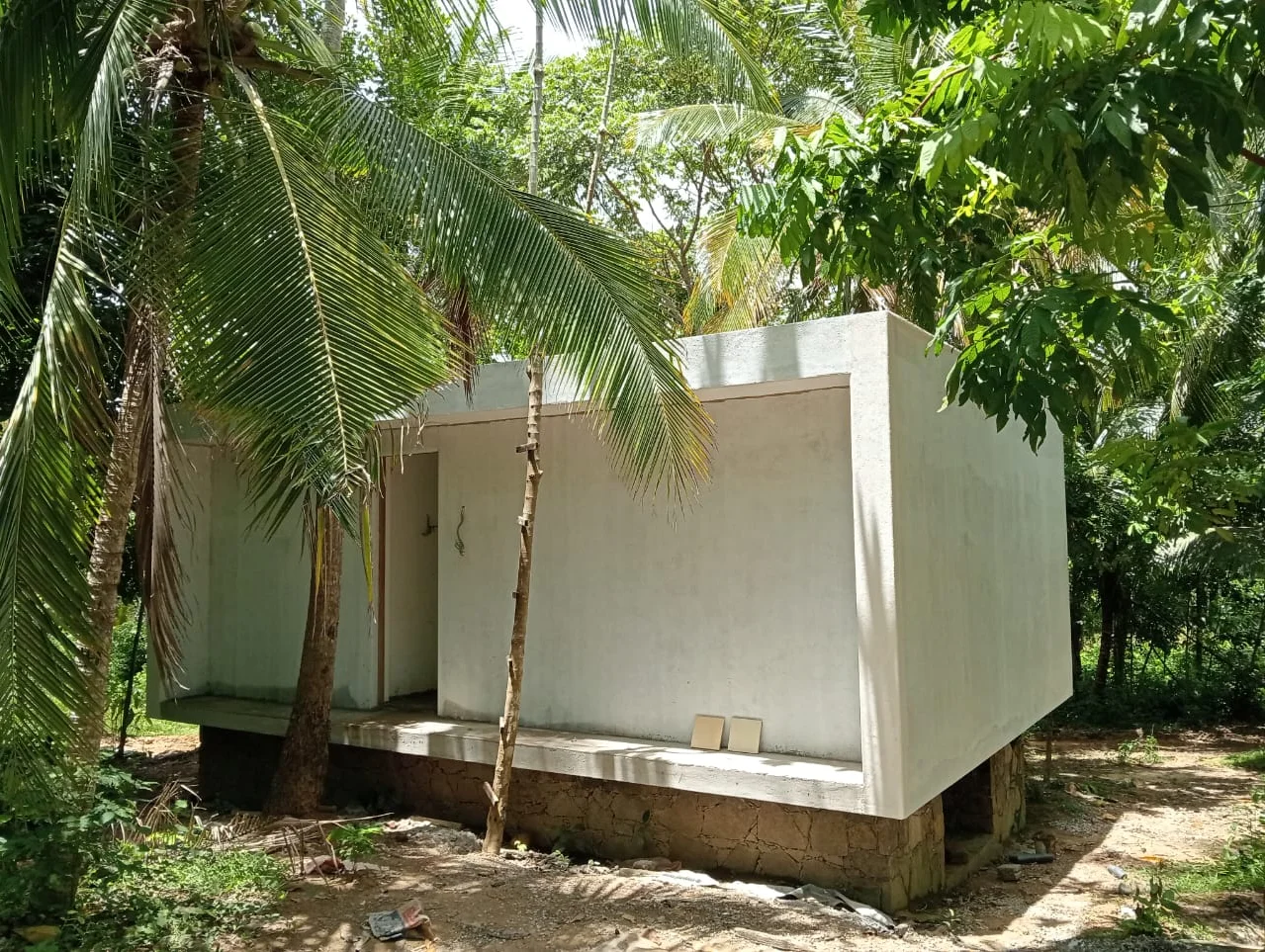
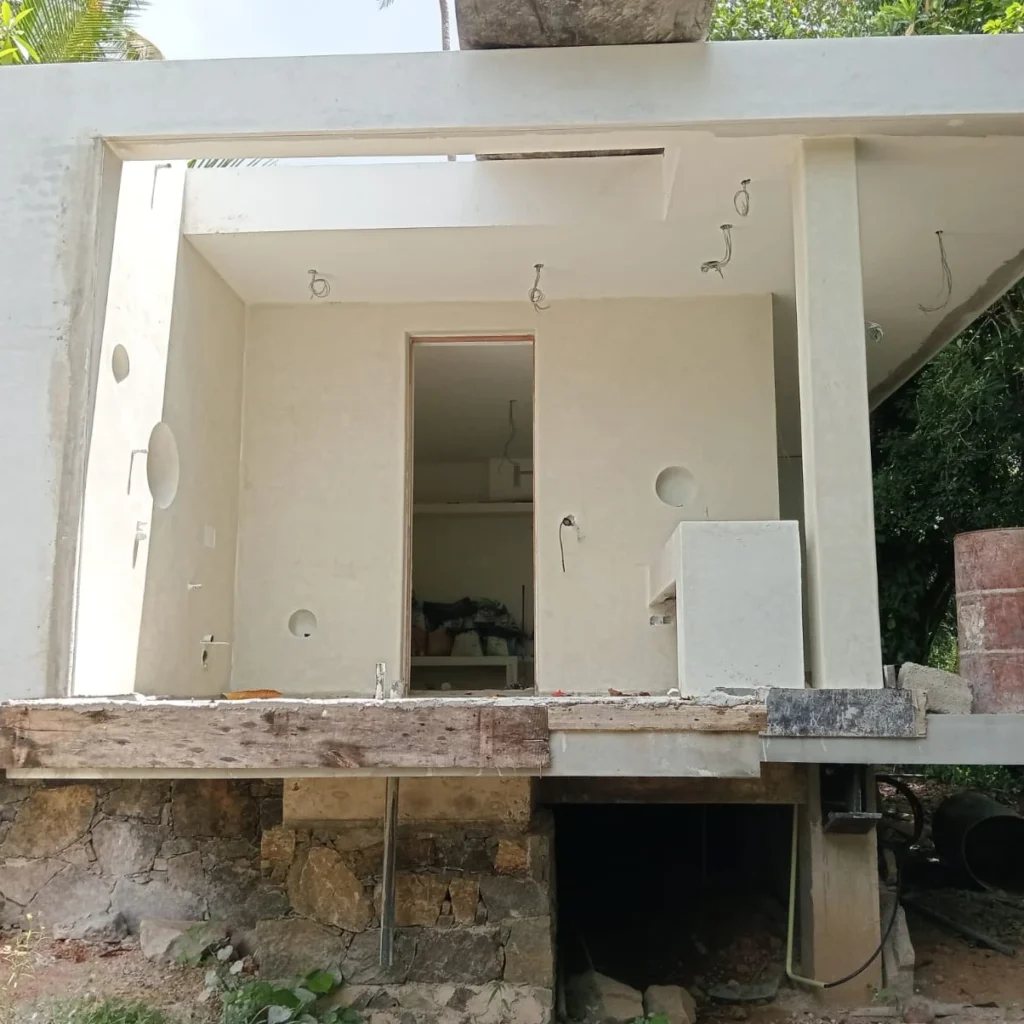
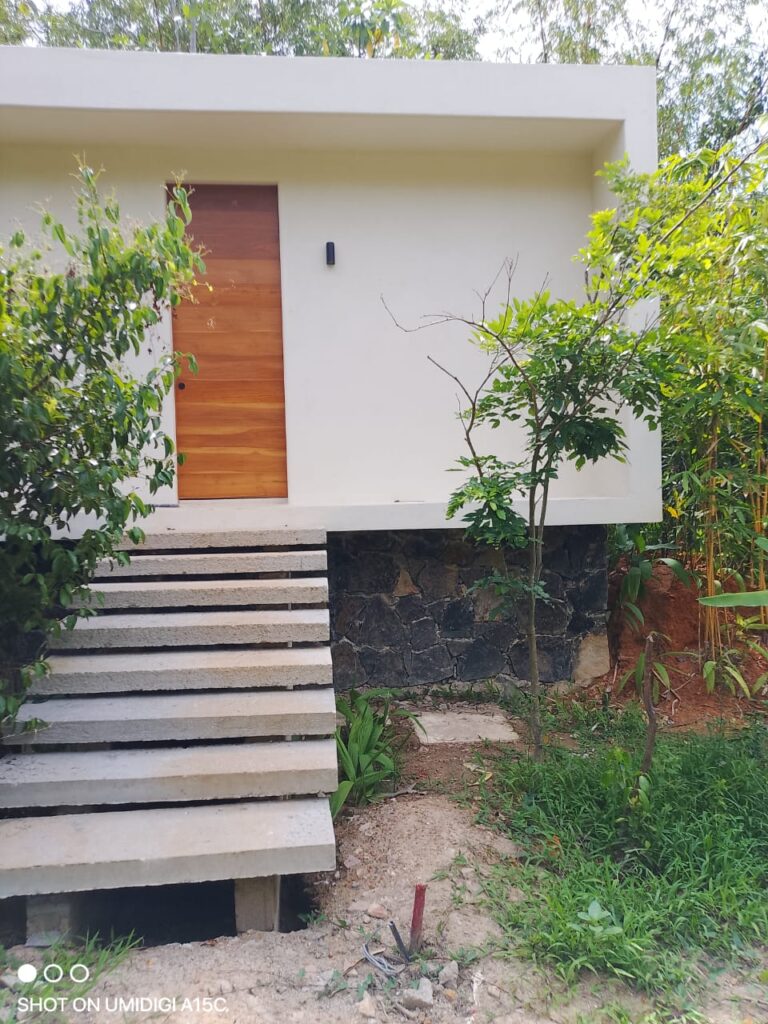
The villa door frames are also being installed, bringing another layer of detail to buildings that, only a few months ago, were still mostly concrete structures.
Building Through Sri Lanka’s Rainy Season
Of course, construction in tropical Sri Lanka comes with another factor we can’t control: the weather.
Heavy rain over the past few weeks has delayed parts of the pavilion roof installation.
But the rain doesn’t just affect construction itself.
Many of the people working on the site travel from villages within an hour of SOLA. Some of the roads they use are unpaved, and during periods of heavy rainfall they can become flooded or temporarily impassable.
That can make it impossible for workers to reach the property.
The impact extends well beyond our construction site. Local schools can also close when flooding becomes severe enough to prevent children from travelling safely.
Building in this environment has been a reminder that a construction schedule can only ever account for so much.
Sometimes the weather makes the decision for you.
Landscaping Begins Across the Estate
Landscaping has officially started. SOLA sits on approximately 12,500 square metres of land, combining slightly elevated areas with lower-lying paddy fields.
Rather than waiting for construction to finish before thinking about the landscape, our landscapers are already working across different parts of the property. Their work will continue right up until the final phase of construction.
One of the biggest challenges has been water management, particularly around the paddy field. During periods of heavy rain and monsoon conditions, water levels can rise significantly.
The villas closest to this area have therefore been built on elevated foundations, with additional reinforcement designed to prevent water from eroding the ground beneath the structures.
We’re also creating natural drainage channels throughout the property to guide excess water away from vulnerable lower areas.
The aim isn’t to fight the landscape, but to design around how water naturally moves through it.
That philosophy has shaped much of SOLA from the beginning.
You can read more about the idea behind the hotel and the land on our About SOLA page.
Preserving the Existing Trees and Plant Life
One of the things we loved most when we first found this property was how alive it already felt.
So rather than clearing the land and starting from scratch, we’ve tried to preserve as much of its existing flora and fauna as possible.
Since January 2024, we’ve been documenting some of the mature plants and trees already growing here.
Among them are:
Coconut trees
We expect the estate to produce around 6,000 coconuts each year.
Jack trees
Some of the mature jack trees reach around 15–20 metres in height. Their jackfruit is popular with the monkeys that regularly move through the property.
Kaju trees
We also have our own cashew trees growing on the land.
But preserving what already exists is only part of the plan.
We’re adding hundreds of new plants and trees, including banana, orange, avocado and coffee.
A dedicated 200-square-metre vegetable garden will also grow herbs, pineapples and other produce that can eventually be used by our kitchen and bar.
Around the pool, natural grass and informal lounging areas will create places for guests to slow down and spend time surrounded by the gardens.
The goal is for the landscape to feel like part of the hotel rather than decoration around it.
Ginger, Pepper, Cinnamon, Tea and More
As the gardens develop, we’re also preparing a small Walk Around the Premise guide for future guests.
The idea is simple: when someone walks through the SOLA grounds, we want them to understand some of what is growing around them.
The estate already includes plants such as ginger, pepper, cinnamon, coconut and tea, alongside the fruit trees and other tropical species being planted.
Many travellers see these ingredients every day on plates or in markets while travelling through Sri Lanka without necessarily seeing how they grow.
At SOLA, they’ll be right outside the rooms.
That relationship between the hotel and its natural surroundings has since become central to how we think about SOLA.
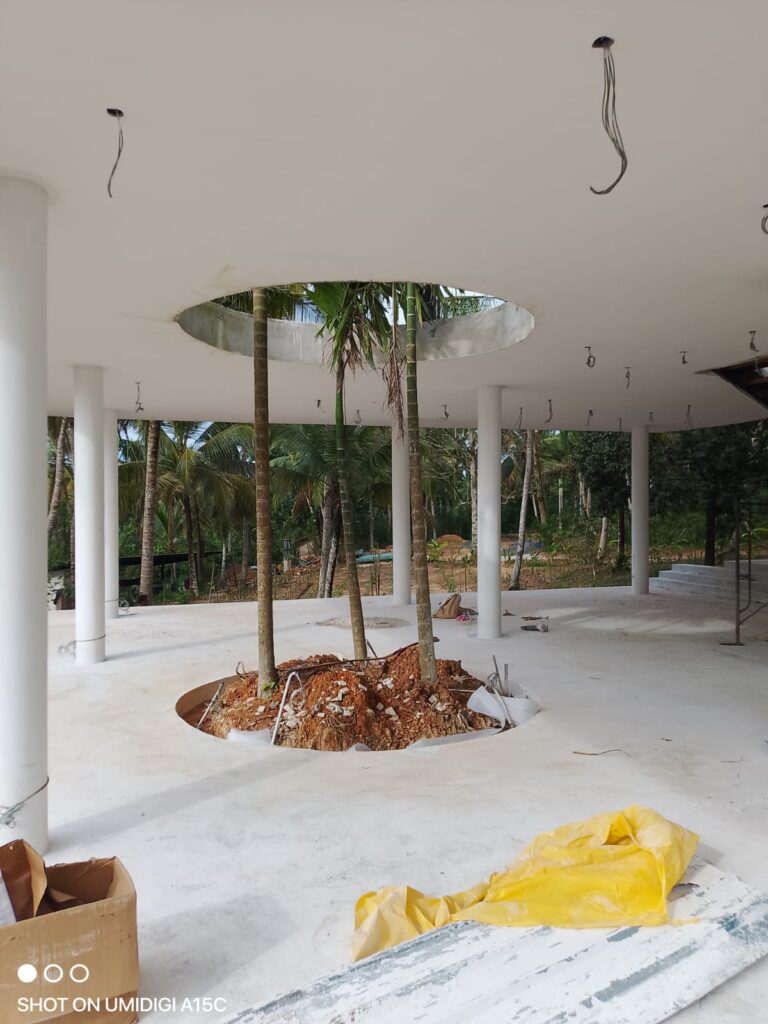
The Betel Nut Palms at the Pavilion
We’ve also recently planted betel nut palms in the pavilion garden.
Their tall, straight trunks give the space a distinctive character, and we’re designing a small garden around them so that the palms eventually feel fully integrated into the pavilion.
In the evenings, subtle garden lighting will illuminate the area and create a softer atmosphere around the communal spaces.
The palms have already survived their first test.
A few weeks after planting, a strong storm swept across the property.
Because their roots hadn’t yet had enough time to establish themselves, the wind actually lifted several of the newly planted palms out of their holes.
Fortunately, they survived.
They’re now standing upright again, and we’re keeping a particularly close eye on them while the roots establish themselves.
Sometimes building a hotel means designing roofs and bathrooms.
Sometimes it means rescuing palm trees after a storm.
Six Months to Get Electricity to SOLA
Some of the most challenging parts of building a hotel in Sri Lanka are the things guests will probably never see.
Electricity has been one of them.
What initially sounded like a straightforward infrastructure task turned into a process lasting more than six months.
In some cases, we’ve been told connections like this can take considerably longer.
Getting power to the property involved repeated discussions with the electricity authorities, navigating administrative processes and relying heavily on the support and experience of our local partners.
SOLA sits approximately 175 metres away from the main road at the end of a quiet lane shared with only a small number of residential properties.
That created an additional complication.
The existing basic connection wasn’t sufficient for a hotel of SOLA’s size.
Instead, we needed a new and more powerful three-phase electricity connection, requiring three large concrete electricity poles to be installed along the route to the property.
After months of coordination, the connection is finally in place.
It may not be the most photogenic construction milestone, but it’s certainly one of the most important.
Next Challenge: Water
With electricity solved, attention has turned to another fundamental piece of infrastructure: water.
We’ve been working on the water connection for roughly three months and have now received the quotation from the official water board.
Many properties in Sri Lanka rely on wells.
For a hotel, however, we decided a direct mains water connection would provide a more reliable long-term solution and reduce issues associated with sediment entering plumbing and equipment.
We’re hoping to have the connection completed within approximately six weeks.
But getting connected is only part of the solution.
Because public water supply isn’t necessarily continuous, SOLA also needs sufficient storage capacity to operate normally between supply periods.
We’re therefore installing approximately 25,000 litres of water storage.
The tanks will give the property a buffer so that hotel operations aren’t interrupted when the mains supply isn’t running.
It’s another piece of infrastructure most guests will never think about — which is exactly the point.
If we’ve done our job properly, they shouldn’t need to.
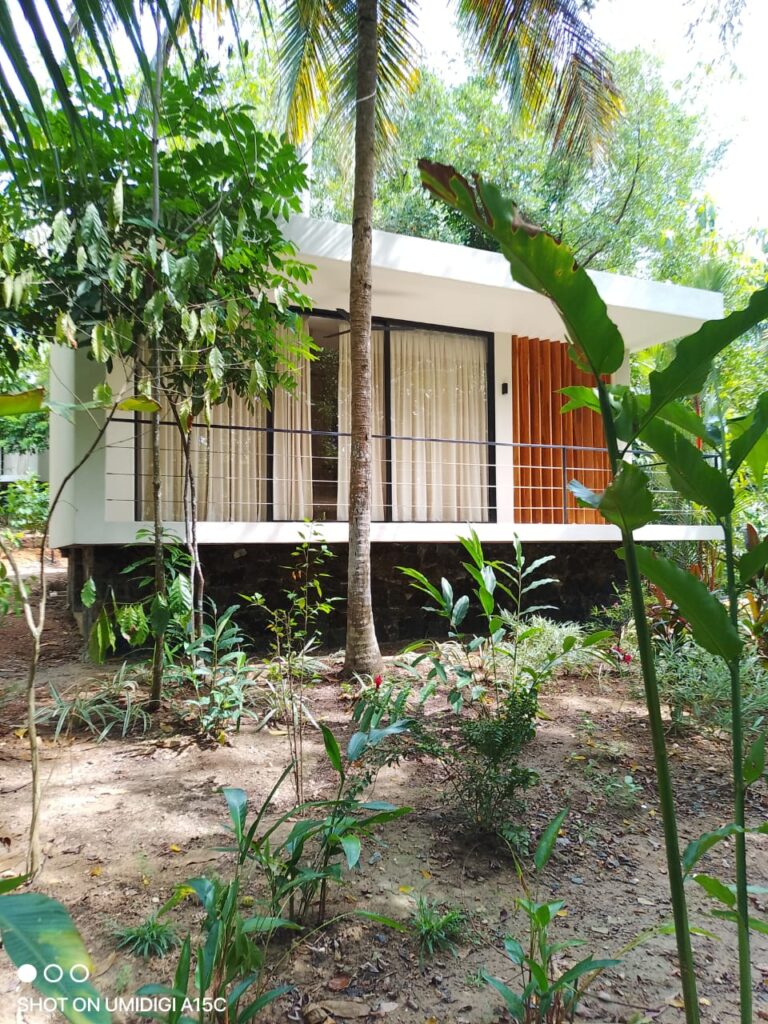
The Villas Enter Their Final Stage
Inside the villas, much of the work that disappears once a hotel is finished is now complete.
Electrical wiring, plumbing and the installations behind toilets and showers are largely in place.
That means we’re finally moving into the finishing stage.
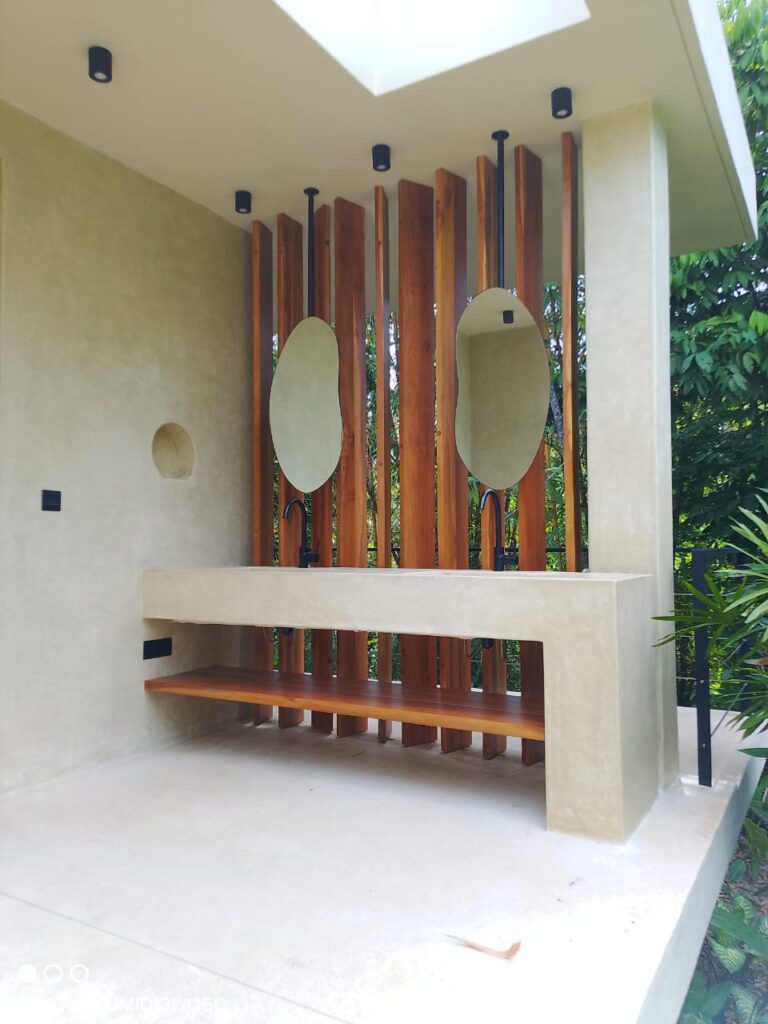
One of the features we’re most excited about is the private jungle bathroom garden attached to each villa.
The first sample gardens have already been planted so that the greenery has time to establish itself before we welcome our first guests.
Our terrazzo floors are also being laid and are now complete in almost all of the villas.
From November onwards, more of our team will be based on site as we move through the final phase.
The next major milestone will be completing the first sample villa from beginning to end.
After spending so many months looking at drawings, construction details and unfinished structures, seeing one villa fully furnished will be a significant moment.
Today, you can see the finished suites that came out of all those decisions on our Stay at SOLA page.
90 Days to Go
There is still plenty left to do.
There are roofs to finish, furniture to install, gardens to grow, systems to test and a team to build.
But looking back at where the property was 310 days ago, it feels extraordinary to see how much has changed.
What started as drawings, ideas and a piece of land in Ahangama is gradually becoming the place we imagined.
For now, it’s back to construction.
Ninety days to go.
Dustin & The SOLA Team
Discover SOLA Today
This update was written while SOLA was still under construction. Since then, the plans, gardens, villas and pavilion described above have become the finished hotel.
You can discover the story behind SOLA, explore our suites or read our guides to Ahangama and Sri Lanka’s South Coast.
If you’re planning a stay, get in touch with the SOLA team.

